Source maintenance free thrust self lubrication plain bushing for printing, weaving, and metal processing
Compare 20 verified options for maintenance free thrust self lubrication plain bushing suitable for printing, weaving, and metal processing machinery. Buyers can review specifications, materials, and customization features from multiple Chinese suppliers.
Key considerations
Products List


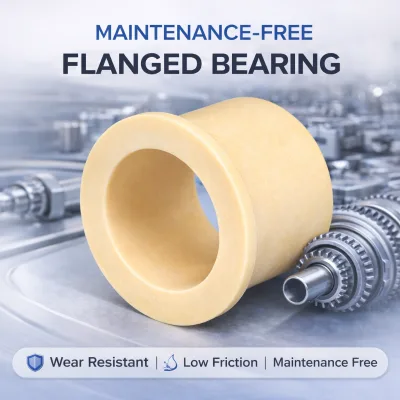
Comprehensive Sourcing Guide
Strategic Sourcing Guide for Maintenance-Free Thrust Self-Lubrication Plain Bushings
Procuring industrial components requires a rigorous approach that balances technical performance with supply chain reliability. For buyers seeking maintenance-free thrust self-lubrication plain bushings, the market offers a diverse array of solutions, yet the path to a successful acquisition depends on precise specification matching and verification of supplier capabilities. This guide synthesizes observed market data and technical attributes to provide a structured framework for evaluating potential suppliers and products. The focus remains on the functional requirements of thrust bearings, self-lubricating properties, and the critical role of manufacturing processes in ensuring long-term operational stability.
Technical Specifications and Material Selection
The foundation of a successful procurement strategy lies in understanding the specific technical parameters of the bushing. The core keyword implies a component designed to handle axial loads without the need for external lubrication systems. Based on available product attributes, the material composition is a primary differentiator. Buyers must verify whether the bushing is constructed from Bronze or Stainless Steel, as each material offers distinct advantages regarding corrosion resistance, load capacity, and compatibility with specific operating environments.
The processing method is equally critical. The market data indicates a divergence in manufacturing techniques, with some products utilizing Cold Extrusion while others rely on CNC Processing or Wrapped methods. Cold extrusion often implies a high degree of dimensional accuracy and work-hardened surfaces, which can enhance fatigue strength. Conversely, CNC processing allows for complex geometries and tight tolerances, particularly when the product is "Custom-Make" or "as Per Your Drawing." The "Universal" attribute suggests that some components may be adaptable to various machinery types, but the "Customized" nature of the product line indicates that bespoke solutions are the norm for specialized applications.
Furthermore, the bearing structure is typically described as a "Solid Bearing," which is essential for thrust applications where the load is applied parallel to the axis of rotation. The lubricating mechanism is defined as "Maintenance-Free," often achieved through the use of solid lubricants embedded within the bearing material. This eliminates the need for oil or grease, making these components ideal for environments where contamination is a risk or where regular maintenance is impractical. The working temperature range is a vital specification; observed data suggests a capability spanning from -200°C to 280°C, a range that accommodates extreme industrial conditions. Buyers must confirm that the specific unit they select can withstand the thermal extremes of their intended application.
Compliance, Certification, and Standard Verification
In the global supply chain, compliance is not merely a formality but a prerequisite for market access and operational safety. The observed product attributes list several certifications, including ISO, ISO 9001:2015, RoHS, CE, and ISOGS. These certifications indicate that the supplier adheres to international quality management systems and environmental standards. However, buyers should not assume that every listed product automatically satisfies all certification requirements. Instead, the procurement process must involve a direct request for current certificates for the specific batch or model being ordered.
Standards compliance is another area requiring careful attention. The market data references a mix of international standards, including DIN1494, ISO3547, BS, ANSI, JIS, GB, GOST, ASTM, and DIN. The presence of "Standard: customized" alongside specific international codes suggests that while some products conform to established norms, many are tailored to specific client requirements. When sourcing, buyers must determine if their application mandates adherence to a specific standard, such as DIN for European machinery or ANSI for North American equipment. If the application requires a specific standard, the supplier must demonstrate their ability to manufacture to that specification, rather than relying on a generic "custom-made" claim.
The "Certificate of Origin" is also listed as "as Per Request," which is a standard requirement for international trade to determine tariff classifications and eligibility for trade agreements. Buyers should ensure that the supplier can provide this documentation promptly to avoid customs delays. Additionally, the "Export Markets: Global" attribute suggests a supplier with experience in international logistics, but this should be verified against the specific shipping ports, such as Qingdao, to ensure the logistics chain aligns with the buyer's distribution needs.
Cost Drivers and Pricing Dynamics
Understanding the cost structure of maintenance-free thrust bushings is essential for budgeting and negotiation. The observed price range in the market spans from $0.01 to $999, a vast disparity that reflects the differences in material, size, complexity, and customization level. The Minimum Order Quantity (MOQ) also varies significantly, ranging from 1 to 2000 units. This variability indicates that the cost per unit is heavily influenced by the order volume and the degree of customization required.
For standard, off-the-shelf components, the MOQ may be low, and the unit price could be minimal. However, for custom-made bushings involving specific materials like Stainless Steel or complex processing methods like CNC machining, the MOQ will likely be higher, and the unit price will reflect the setup costs and specialized labor. The "Customized" attribute and the availability of "as Per Your Drawing" services imply that each custom order introduces unique cost drivers, including design time, tooling, and quality assurance testing.
Buyers should also consider the impact of surface treatments on cost. Attributes such as Spraying, Polishing, Galvanized, and Electroplating are listed as available options. Each of these treatments adds a step to the manufacturing process and increases the final cost. The decision to include these treatments should be based on the specific environmental conditions of the application; for instance, galvanized or electroplated finishes may be necessary for corrosive environments, while polishing might be required for aesthetic or low-friction reasons.
Typical Applications and Performance Requirements
The versatility of these bushings is evident in the wide range of applications listed. The observed data highlights usage in Printing, woven, tobacco, and gymnastic machinery, as well as various metal processing sectors including casting, coating, drawing, engraving, forging, spinning, straightening, and cutting. This breadth of application underscores the importance of selecting a bushing with the correct load capacity and fatigue strength.
The "Good fatigue strength, load capacity, impact strength" attributes are critical for machinery that undergoes cyclic loading or sudden shocks. In metal forging or cutting machinery, the bushing must withstand high impact forces without deforming. In printing or weaving machines, the precision and smooth operation are paramount, requiring a bushing that maintains its dimensions over long periods without lubrication. The "Maintenance-Free" nature of the bearing is particularly valuable in these high-speed or hard-to-reach applications, where the failure of a lubrication system could lead to catastrophic downtime.
When evaluating a supplier, buyers should ask for case studies or references related to their specific industry. A supplier experienced in the metal processing sector may have different quality control protocols than one specializing in textile machinery. The "Application" field often lists multiple industries, but the buyer must ensure the supplier has proven expertise in their specific niche to guarantee that the bushing will perform reliably under the unique stresses of that application.
Supplier Evaluation and Quality Assurance
Selecting the right supplier involves more than just comparing prices; it requires a deep dive into their manufacturing capabilities and quality assurance processes. The "Quality: Guaranteed" attribute is a common claim, but it must be substantiated by the supplier's internal processes. Buyers should inquire about the specific quality control measures in place, such as in-process inspections, final testing, and statistical process control.
The "After-Sale Service: Definetly" attribute suggests a commitment to customer support, but the specifics of this service—such as warranty terms, replacement policies, and technical support availability—should be clearly defined in the contract. The "Sample: 7 Days Ready" attribute indicates a relatively quick turnaround for prototyping, which is beneficial for validating the fit and function of the bushing before committing to a large production run.
When evaluating suppliers, buyers should verify their production capacity and lead times. While the observed data does not provide specific lead times for all products, the "Sample: 7 Days Ready" suggests that the supplier can move quickly on small orders. For larger orders, the lead time will depend on the complexity of the customization and the current production schedule. The "Transport: by Sea or Air" option provides flexibility in shipping, but the buyer must factor in the cost and time implications of each mode.
Long-Term Procurement and Lifecycle Management
Procuring maintenance-free thrust bushings is a long-term investment that requires consideration of the total cost of ownership. While the initial purchase price is important, the lifespan and reliability of the component are equally critical. The "Working temperature: -200~280" range suggests a robust design capable of withstanding extreme conditions, but the actual lifespan will depend on the specific operating parameters of the machinery.
Buyers should establish a clear protocol for monitoring the condition of the bushings in service. Even though they are "Maintenance-Free," periodic inspections can help identify early signs of wear or failure. The "Solid-Lubricated Bearing" technology implies that the lubricant is embedded in the material, and once depleted, the bushing may fail. Understanding the expected life of the solid lubricant is essential for planning replacement schedules and minimizing unplanned downtime.
Furthermore, the "Packing" options, including Anti-Rust Paper, Carton, Wood Case, Pallet, and Plywood Cases, play a role in the longevity of the component during storage and transit. Proper packaging ensures that the bushings arrive in pristine condition, free from corrosion or physical damage. Buyers should verify that the packaging meets the requirements for their specific shipping environment, especially if the components will be stored for extended periods before installation.
In conclusion, sourcing maintenance-free thrust self-lubrication plain bushings requires a meticulous approach that balances technical specifications, compliance, cost, and supplier reliability. By focusing on the observed attributes and verifying them against specific application needs, buyers can make informed decisions that ensure the long-term success of their operations. The diversity of the market offers numerous options, but the key to success lies in rigorous evaluation and clear communication with suppliers to ensure that the final product meets all performance and quality expectations.
| Feature Category | Observed Attributes | Buyer Verification Requirement |
|---|---|---|
| Material | Bronze, Stainless Steel | Confirm material grade and suitability for operating environment. |
| Processing | Cold Extrusion, CNC, Wrapped | Verify process capability for required tolerances and geometry. |
| Certification | ISO, ISO 9001:2015, RoHS, CE | Request valid certificates for the specific product batch. |
| Standards | DIN, ISO, ANSI, JIS, Custom | Confirm adherence to industry-specific standards if required. |
| Lubrication | Solid-Lubricated, Maintenance-Free | Validate solid lubricant type and expected service life. |
| Packaging | Anti-Rust Paper, Carton, Wood Case | Ensure packaging prevents corrosion during transit and storage. |
| Applications | Printing, Metal Processing, Textile | Check supplier experience in the specific industry sector. |
| Temperature | -200°C to 280°C | Confirm thermal stability for the specific application range. |
FAQs
What materials are used for these bushings?
These bushings are constructed from Bronze or Stainless Steel to ensure durability and corrosion resistance. The material selection depends on specific application requirements such as load capacity and operating environment conditions.
How are these bushings processed during manufacturing?
Manufacturing involves Cold extrusion, CNC Processing, or Wrapped methods depending on the design complexity. These processes ensure high dimensional accuracy and work-hardened surfaces for enhanced fatigue strength.
Which certifications do the products typically hold?
Products often hold ISO, ISO 9001:2015, RoHS, CE, and ISOGS certifications to meet international quality standards. Buyers should verify specific batch certificates as not every listed product automatically satisfies all certification requirements.
Can the bushings be customized to specific drawings?
Yes, customization is available with options to manufacture as per your drawing or custom-make specifications. This allows for tailored solutions regarding dimensions, materials, and surface treatments like spraying or galvanizing.
What is the working temperature range for these bearings?
The operating temperature range spans from -200 to 280 degrees Celsius to accommodate extreme industrial conditions. This wide range ensures reliable performance in environments subject to thermal stress or extreme cold.
How are the products packed for international shipping?
Packaging options include Anti-Rust Paper, Carton, Wood Case, Pallet, or Plywood Cases to prevent damage during transit. The specific packing method is selected based on order size and destination requirements.